


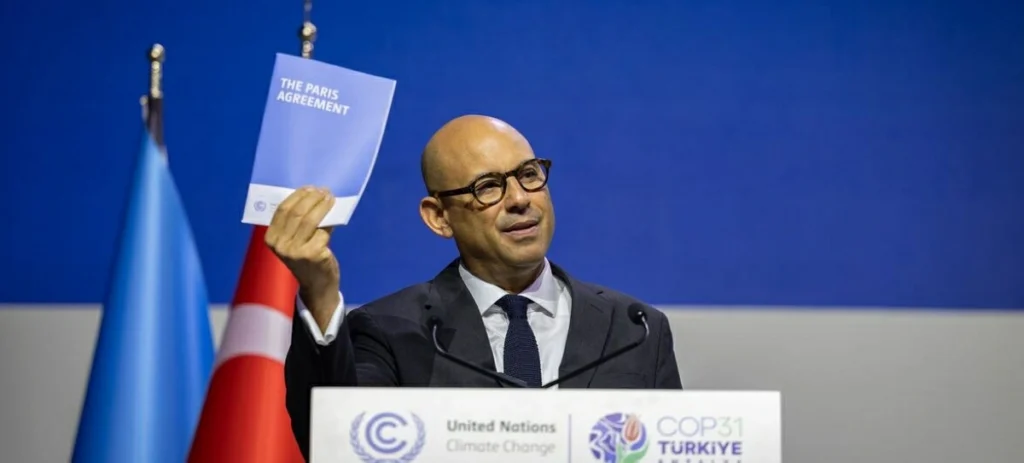
ANTALYA — World leaders and experts have gathered in the Turkish city of Antalya for the COP31 summit, running from 9 to 20 November, where the health effects of climate change are playing a central role in the discussions, according to Simon Stiell, UN Climate Change Executive Secretary.
From air pollution to extreme heat, climate change poses a growing threat to people’s health worldwide.
“The climate crisis is now a global health crisis of pandemic proportions”, said Stiell, adding that climate disasters are battering health systems and infrastructure, and assuring that health would again be a central issue at this year’s summit.
“At this COP, nations face a choice: electric or shock. Rewire the global economy for the electric age or accept ongoing fossil fuel cost pain for families, firms, and governments, and of course that includes health systems”, Stiell said.
Burning fossil fuels and human-caused climate change are linked to an estimated 3.3 million deaths annually through outdoor air pollution and extreme heat, according to the Lancet Countdown 2026.
The past 12 years have been the warmest on record, with the last four – including 2026 – ranking as the four warmest, according to a new World Meteorological Organization report published on 9 November.
Rising temperatures, drought and heavy rainfall can contribute to heat-related illness and mortality, wildfire smoke and poor air quality, malnutrition and food insecurity, injuries, and changing risks of water- and vector-borne diseases such as cholera, malaria and dengue.
“Climate risk finds every vulnerability in a health system and widens it”, Stiell said, citing effects ranging from power cuts to hindered water sanitation.
Stiell said that health should always be “at the heart of climate action” and that the ministries responsible for it must be involved in adaptation discussions.
“Every national adaptation plan should be able to answer some essential questions: Can clinics stay open through a heatwave? Do they have safe water after a flood? Can health workers spot an outbreak before it spreads? Will those most at risk get the care they need?,” he added.
Yet adaptation is not the only answer. “No health system can be made resilient to an endlessly warming world,” Stiell noted, calling on countries to ensure that health is embedded in how climate plans are designed, financing decisions are made and progress is measured.
Delegations from nearly 200 countries will be attending the summit, with up to 1.5 million visitors expected at the event and exhibition areas.
The opening day of the conference on Monday saw developed and developing countries clash over climate finance and trade, delaying the adoption of the formal negotiating agenda. The dispute centers on funding commitments under the Paris Agreement and the extent to which developed economies should finance climate action in poorer nations.
The disagreement comes as countries prepare to operationalize a new climate finance target of at least $300 billion annually by 2035, agreed at COP29 in Baku. Developing nations, however, have argued that the commitment falls short of their requirements and want greater clarity on the quantum, accessibility, and public financing component of support from developed economies.
The European Union and the Umbrella Group, a negotiating coalition of developed countries, resisted the proposed agenda, according to Meenakshi Raman, head of programs at Malaysia-based non-profit Third World Network. The disagreement continued into the opening session, with the agenda eventually adopted after negotiations.
Raman said developing countries wanted developed economies to engage in discussions on the financial support they could provide and explain any constraints affecting their ability to meet those commitments. She argued that COP31, positioned as an implementation-focused summit, should address the delivery of existing obligations.
The financial commitments are a key part of the negotiations. Under the $ 100 billion annual climate finance goal agreed at COP15 in Copenhagen in 2009, developed countries were expected to mobilize funds for developing economies by 2020. The target was first met in 2022, two years after its original deadline.
Source: Saudi Gazette
