


Rapid AI adoption and emerging risks such as post-quantum threats are adding new layers of complexity to the cybersecurity landscape, placing greater pressure on enterprises to balance innovation with security, governance and measurable business outcomes. Bulwark Technologies has spent 27 years building its cybersecurity presence across the region, while adapting its portfolio and partner ecosystem to address evolving enterprise requirements.
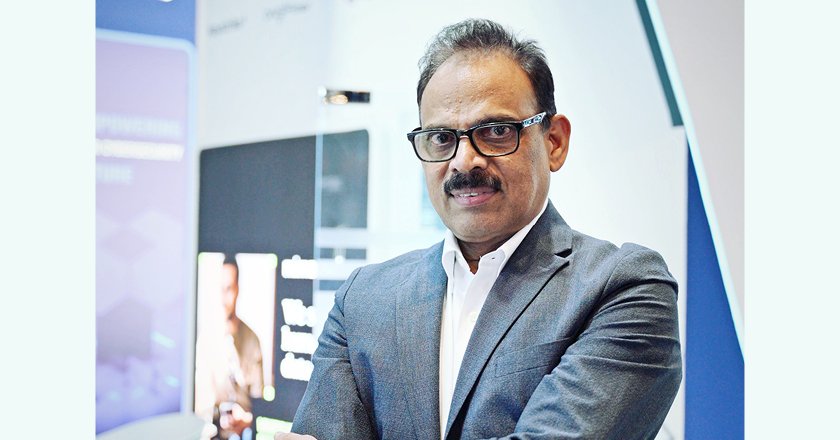
Jose Menacherry, Managing Director, Bulwark Technologies, discussed with Sandhya D’Mello, Technology Editor, CPI Media Group, at GISEC Global 2026, the company’s growth journey; the changing cybersecurity landscape; responsible AI adoption; the importance of human oversight; and why organisations need to begin preparing for the transition to post-quantum cryptography.
Bulwark’s journey spans almost three decades, beginning in 1999. Having witnessed the region’s digital transformation, how does it feel to see Bulwark’s presence and growth at GISEC Global 2026?
We had a very humble beginning in 1999, starting as a two-person company. It has now been 27 years, and we have grown gradually by adding new technologies, vendors, partners, and, of course, customers. Our growth has always been stage-by-stage rather than sudden. Today, we have offices across the region, including Saudi Arabia, as well as operations in India. We continue to explore opportunities to expand further. Over the years, we have built strong relationships with our channel partners and developed a portfolio of more than 30 vendors covering different areas of cybersecurity. Alongside technologies, we also provide services and solutions that enable our partners to address customers’ evolving requirements.
The role of distributors and resellers has changed significantly. How are enterprises balancing the AI hype with existing technology investments and the need to deliver measurable business outcomes?
Cybersecurity is constantly evolving. When we started, cybersecurity itself was a relatively niche area, but the landscape has changed significantly over the years. New threats continue to emerge, and organisations need to adapt accordingly. There is no single cybersecurity solution that can address every requirement. Organisations may need multiple technologies that integrate with their existing infrastructure and security systems. Cybersecurity is a continuous process rather than a one-time investment. Requirements also differ from one organisation to another. Businesses need to understand what they are protecting, the risks they face, and the outcomes they expect. As a distribution company, our role is to work closely with partners and enterprises to understand those requirements. Based on that understanding, we can bring together multiple technologies and solutions to address specific business and security needs.
With no one-size-fits-all approach, what advice would you give enterprises navigating AI, cybersecurity disruption and growing pressure to demonstrate ROI?
AI has become one of the biggest technology developments of the past three or four years. Many companies are introducing AI-based products and tools, while organisations may already have AI applications operating within their environments. Enterprises therefore need to establish a proper balance between what they expect from AI and what AI should be permitted to do. Organisations should define clear boundaries and policies governing how AI technologies are deployed and used. Human involvement also remains important, particularly when AI is involved in critical decisions. Organisations need to determine where automation is appropriate and where human intervention and oversight are necessary. Before deploying AI, businesses should understand what they are getting into, what they want to achieve, and how far they are prepared to allow AI systems to operate autonomously.
What will be Bulwark’s key areas of focus in 2027?
AI will be one of our core focus areas, particularly AI security, security for AI, and the secure use of AI technologies. Another major area is post-quantum cryptography. This is becoming increasingly important because of the potential future impact of quantum computing on existing encryption technologies. Organisations also need to consider the “harvest now, decrypt later” threat. Information stolen today may remain valuable for many years. Even if attackers cannot decrypt that information now, future quantum capabilities could potentially allow them to access it. Companies therefore need to begin preparing for post-quantum cryptography now. Migration cannot be treated as a one-time project; it is a process involving multiple stages. The first step is understanding the organisation’s existing cryptographic environment and identifying potential exposure. Businesses need to assess where cryptography is being used, determine which systems may be vulnerable, and establish priorities for remediation. From there, organisations can begin moving towards post-quantum-ready environments. We are working with multiple vendors and technologies that support cryptographic discovery, assessment, PKI, certificates, data protection and other elements required for this transition.
What is your message to the cybersecurity community at GISEC Global 2026?
AI is clearly one of the biggest themes at GISEC Global 2026. Organisations need AI because of the speed at which businesses and cyber threats are evolving. Companies need to act faster, process more information and make decisions more efficiently, and AI can play an important role in enabling that. At the same time, organisations need to be careful about how AI is implemented. Governance, security and appropriate human oversight remain essential. AI is becoming increasingly important for organisations that want to remain competitive, but adoption must be balanced with a clear understanding of the associated risks. Businesses need to embrace AI while ensuring that the right controls, policies and security measures are in place.
Image Credit: Bulwark Technologies
Source: Tahawul Tech
