


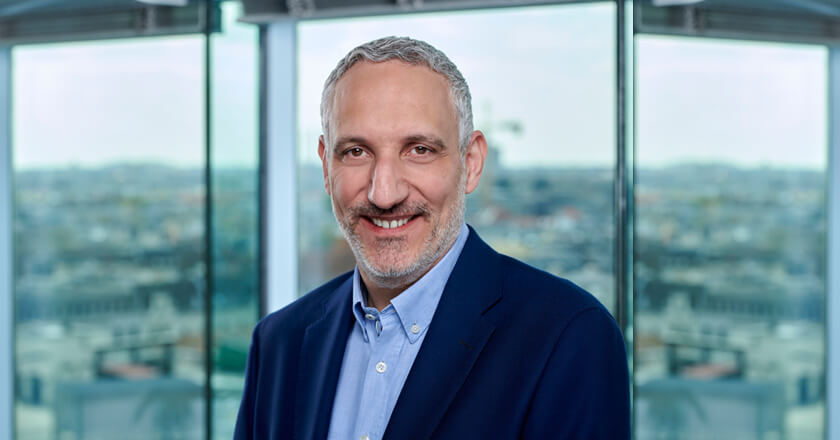
Fady Younes, Managing Director, Cybersecurity, Cisco Middle East, Türkiye, Africa, Caucasus and Central Asia (METAC), looks at how AI is changing the speed of cyber threats and why organisations increasingly need to focus not only on the security technology they have in place, but on how effectively and quickly they can act when an incident occurs.
Traditionally, cybersecurity investment has been measured in terms of the tools and controls an organisation has in place. While this is key, the growing importance of Artificial Intelligence as a threat vector points towards the need for a broader perspective.
Today, advanced, frontier AI models have the capability of accelerating vulnerability discovery and exploit development from weeks or months to minutes, compressing the time security teams have to assess, prioritise and respond.
That shift in timescales requires that organisations must increasingly focus on a second, equally key question: not simply ‘What security technology do we own?’ but ‘What can we actually do when an incident happens’, and, realistically, ‘How effectively and quickly does my organisation actually respond to threats?’
Measuring what matters
Effective cyber defence in the AI era requires looking beyond technology ownership towards execution. That means asking how much of the environment can actually be protected, how quickly teams can detect, respond to, and remediate a threat, and what stands in the way when they need to act.
A control may exist on paper, but its value ultimately depends on whether it works under real-world conditions and whether the organisation around it can respond at the same pace.
Reflecting this shift in thinking, Cisco’s recent Relentless Defence Report assesses cyber defence posture of a number of organisations across three dimensions: coverage, speed and friction. ‘Coverage’ relates to how completely organisations can protect their environments. ‘Speed’ considers how quickly they can detect, respond to and remediate threats. ‘Friction’ examines what slows them down.
In this research, security practitioners highlighted a critical point: When asked what they would change about their defence approach, six out of ten security practitioners globally named an organisational barrier rather than a technical limitation.
When technology moves faster than the organisation
UAE organisations are already seeing the benefits of AI in cybersecurity. Among those using AI-powered security, 89% report at least a 25% improvement in threat-detection speed, while 85% report a similar improvement in response and remediation.
But faster technology does not automatically create a faster organisation. Only 41% of UAE organisations say their security and network or infrastructure teams operate as one coordinated team with shared visibility and tools. At the same time, 40% say critical security insights are often missed because data remains trapped in silos, while 41% spend more time manually collecting and correlating data than investigating threats.
These findings show why execution matters. Ownership, approval processes, fragmented data and internal silos can influence cyber outcomes just as much as the technology itself. When threats move at machine speed, delays in deciding who acts, accessing the right information or coordinating across teams become more consequential. Organisations therefore need to examine not only whether security capabilities are in place, but whether teams have the visibility, authority and processes required to act on them quickly.
From deployment to execution
The next phase of cyber defence cannot be about adding technology alone. It must also be about removing the friction that prevents existing capabilities from working together effectively.
Clear ownership matters. Security, networking and infrastructure teams need shared visibility and a common understanding of how they will respond. Incident-response processes should be tested, not simply documented. AI can also reduce manual work by helping collect and correlate information, allowing people to focus on judgment and decisions.
The fundamentals have not disappeared. What has changed is the speed at which organisations need to execute them. This means measuring cyber readiness not only by the controls deployed, but by how effectively those controls perform when tested under real-world conditions.
As AI continues to reshape both attack and defence, the organisations best positioned to respond will not necessarily be those with the longest list of security tools. They will be the ones that know what they can protect, understand how quickly they can act and have removed as much friction as possible before an incident occurs.
In the AI era, effective cyber defence will increasingly be defined not by what an organisation owns, but by what it can actually do.
Image Credit: Cisco
Source: Tahawul Tech
