


Apple has given mobile photography a major upgrade with the iPhone 18 Pro and iPhone 18 Pro Max, introducing a variable-aperture main camera alongside expanded manual controls and a triple 48-megapixel camera system.
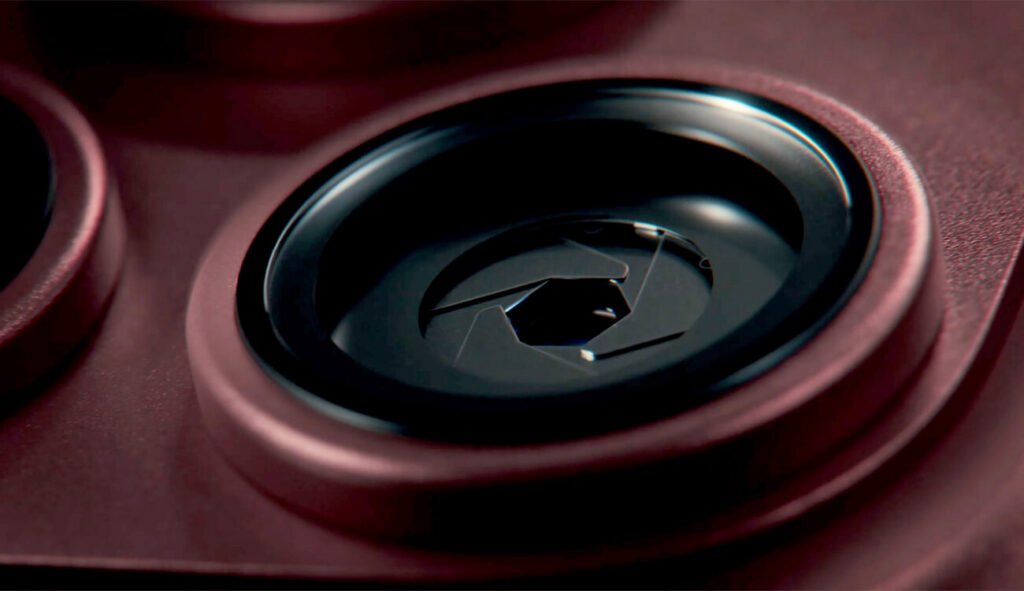
The headline addition is the 48MP Fusion Main camera, which features a 24mm-equivalent lens and a mechanical aperture that can shift between ƒ/1.48 and ƒ/4 across four settings.
The wider ƒ/1.48 aperture — the widest Apple has offered on an iPhone — allows more light to reach the sensor when needed, while narrowing the aperture can increase depth of field and help keep more elements of a scene in focus.
The technology also represents an impressive feat of miniaturization. An iFixit teardown revealed that the variable aperture relies on six tiny overlapping blades that physically adjust the opening of the lens. Each blade is roughly comparable in thickness to a human hair, fitting a complex mechanical system inside the compact camera module.
Apple has paired the new hardware with greater manual control. Photographers can adjust aperture, shutter speed and white balance directly through the Camera app, while a histogram provides real-time information for monitoring exposure.
The main camera is accompanied by 48MP Fusion Ultra Wide and 48MP Fusion Telephoto cameras. The telephoto system offers 4x optical zoom and an 8x optical-quality option, giving users greater flexibility when shooting everything from landscapes and group photos to portraits and distant subjects.
Video remains another major focus. The main camera supports 4K recording at up to 120 frames per second, while Cinematic mode can capture 4K video at up to 60 fps, expanding the options available to filmmakers and content creators using an iPhone as their primary camera.
Apple is also addressing growing concerns over image authenticity. The new Apple Reference Image feature can capture signed information from the camera sensor and generate an uneditable reference image, providing a way to help determine whether a photograph has later been altered — a potentially valuable tool for journalists and photographers as AI-generated and manipulated images become increasingly common.
The camera system is backed by Apple’s A20 Pro chip and computational photography technology. The iPhone 18 Pro Max also features a 6.9-inch Super Retina XDR display, an upgraded thermal system and, on eSIM-only models, up to 45 hours of video playback.
Rather than relying on higher resolution alone, Apple is using the iPhone 18 Pro Max to combine mechanical optics, computational photography and manual camera controls. The result is a more versatile imaging system that keeps the simplicity of smartphone photography while giving photographers and content creators more control over how their images are captured.
Should You Buy the iPhone 18 Pro?
If photography and video are a big part of how you use your phone, the iPhone 18 Pro and Pro Max make a compelling case. The new manual camera controls give creative users more freedom behind the lens, while the improved video capabilities are particularly appealing for those who frequently shoot in challenging or low-light conditions.
For photographers, filmmakers and content creators who want more control without carrying dedicated camera gear, the iPhone 18 Pro could be one of Apple’s most interesting upgrades yet.
Source: Riyadh Daily
